The shift from typing a question into Google to asking an AI tool instead isn't coming. It's already here. If AI engines are the new front door to your business, the real question is how you actually show up inside the answer.
For years the playbook was simple: write for the search bots, open with a 1,000-word introduction, and bury the actual answer near the bottom of the page. That approach is dead. AI engines like ChatGPT, Claude, and Perplexity don't read like traditional search engines. They're scanning for an immediate, definitive answer, not a preamble.
Staying visible in an AI-first search landscape means a real change in how content gets structured. Here's the blueprint.
The answer-first mandate
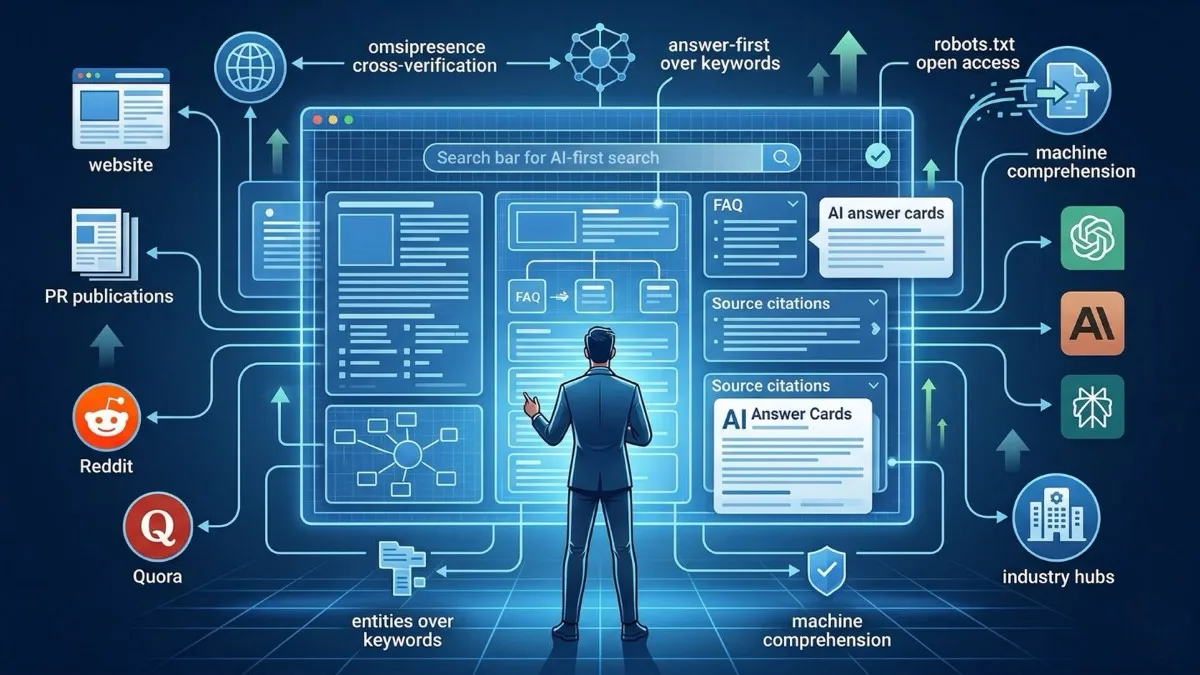
AI scrapers don't have time for fluff. Put the exact answer to the reader's question in the very first sentences. Give the machine the answer immediately, then provide the deep-dive context, tables, and numbers for the humans who keep reading.
Being everywhere is the new authority
The average AI response pulls from 12 to 15 different sources to put together an answer. If your information only exists on your own website, you're close to invisible. Your brand and your insights need to show up across PR publications, Reddit, Quora, YouTube, and the hubs people in your industry actually read. AI tools cross-check these different touchpoints against each other to decide what to trust.
Entities over keywords
Keyword stuffing is obsolete. AI understands concepts, not strings of text. Build content that covers the who, what, and why of your subject properly, as comprehensive entity clusters, rather than pages engineered to rank for a phrase.
Stop hiding your FAQs
Move your most important FAQs higher up the page, and take them out of complex accordions a crawler can't easily read. People ask AI tools highly conversational, specific questions. Your content needs to provide clear, structured answers to those exact questions, not bury them three clicks deep.
Check your robots.txt
When AI first emerged, the knee-jerk reaction for a lot of sites was to block the bots out of caution. If you want to be cited in AI answers today, that instinct works against you. You have to open the doors and let them in.
The brands that win this next stretch won't just have the best content. They'll have content structured for fast machine comprehension, backed by a presence that spans well beyond their own website.
Are you still optimising for the search engines of 2015?
We don't sell AEO or GEO as a separate product with its own acronym and price tag. It's built into how we approach SEO for every client, because getting cited in an AI answer runs on the same fundamentals as ranking in a search result: clear structure, real expertise, and content that actually answers the question.

Jinnat Ul Hasan
Founder & CEO, Whizz People